Which of the Following Is an Example of Eastern European Folk Art?
The following roundtable concluded a panel devoted to gimmicky and art historical perspectives on central and East European fine art and culture from 1945 to the present at this twelvemonth'due south Higher Art Clan Conference in Chicago. The console was convened past Susan Snodgrass who has too written the introduction to the discussion. Over the next few months, ARTMargins volition publish, in lose succession, the papers delivered by the panel'due south participants.
Participating Panelists
Roann Barris (R. B.) Since receiving her Ph.D. in art history, Roann Barris has been teaching courses in modernistic and gimmicky western and non-western art history, and is currently education at Casper Higher in Wyoming. She has continued to exercise research and has published several manufactures on the reception of Russian constructivism, work which was supported by grants from IREX, the Social Scientific discipline Research Council, and a Kress fellowship. Her more than contempo work, on the Romanian architectural competition, "the Bucharest 2000," likewise received back up from an IREX grant. A longer version of her CAA presentation on this topic has been published in the May 2001 upshot of the Journal of Architectural Education.
Attila Horányi (A. H.) is a Ph.D. candidate in the Department of Aesthetics at Eötvös Lóránd University in Budapest, and a lecturer in the Department of the History of Philosophy at the Academy of Pecs, also in Hungary.
Matthew Jesse Jackson (M. J. J.) is a doctoral candidate at the University of California, Berkeley, in the Section of the History of Art. He is as well a doctoral candidate in Russian Literature at Columbia University, New York. He is currently completing his dissertation, entitled Answers of the Experimental Group: Ilya Kabakov, Soviet Conceptualism, and the End of An Advanced.
Martina Pachmanová (M. P.) is an art historian, contained curator, and writer. She is Assistant Professor at the Academy of Arts, Compages, and Design in Prague, Czech Democracy. Her essays and articles on modern and contemporary art, many of them dealing with problems of gender, sexual politics, and feminism, accept been published in periodicals and exhibition catalogues in the Czech Commonwealth, Slovakia, Croatia, Germany, the United Kingdom, and the U.s.a..
Piotr Piotrowski (P. P.) is Professor and Chair of the Department of Art History at Adam Mickiewicz Academy, Poznan, Poland, and currently is a Visiting Professor at the Center for Curatorial Studies at Bard College. He is besides co-editor of the annual journal Artium Quaestiones; Vice-President of AICA-Poland; and former Senior Curator of contemporary art at the National Museum, Poznan, where he served from 1992 to 1997.
Katalin Timar (Yard. T.) is an art historian, curator, and critic based in Budapest, Hungary. She is a doctoral candidate in the Section of Art History at ELTE Academy of Arts and Sciences, Budapest, where she is also a founding member of OTKA Research Group in the University'south Department of Aesthetics.
Introduction
The production and interpretation of East-Central European art during the last l or so years have been greatly influenced by the region's political events, in item the rise and fall of Communist rule. Although political oppression of civilization has dominated much of the region's history since the Second World War, creative expression survived outside the official structures. Likewise, the sanctions imposed by Socialist doctrine varied from country to country, bookkeeping for the eclectic nature of both official and unofficial fine art from the former Eastern Bloc.
The Wall's destruction and, more importantly, the image of the Wall's devastation imprinted upon our collective retentiveness, ruptured, in theory, the geopolitical divide between Due east and W, exposing the failure of the Communist project, whose corpus is at present disembodied. However, physical borders are easier to destroy than mental ones, as the painful reconstruction of Russia, East-Cardinal Europe and the Balkans has shown. Still in place are unfulfilled fantasies on both sides of the sometime Wall — some in the East are disillusioned with the West, while some in the Westward are disappointed that the East has not been reborn in its own likeness.
The dramatic political changes occurring throughout E-Fundamental Europe since the fall of the Berlin Wall have created a costless but transitional state of doubtfulness, spawning an essential questioning of cultural identity. This process of transformation and cocky-definition includes critical assessment of both the Communist and pre-Communist by, reflective analysis of the post-Communist present, and conception of strategies anticipating the time to come. These endeavors are destabilizing, yet each attempts to situate the region within larger historic, geographic and cultural narratives, the task of our console here today.
In an attempt to sympathize the shifting realities of this new epitome, artists, critics and cultural institutions are redefining art's role in a ceremonious society, expanding its audiences and creating a disquisitional context that allows for broader fields of interpretation. I strategy has been to reclaim the heritage of Eastward-Central European fine art history, correlating the art of the present with the art of the past, in particular those movements that sought universal ideas while asserting the sensibilities of place.
Thus, East-Central Europe stands at an of import artistic and geographical crossroads, where the intersection of local, regional, and international perspectives allows for the free exchange of ideas. The deep divisions that one time defined art as either official or unofficial are gone, just bang-up voids in the art historical soapbox remain. Being charted is a new disquisitional dialogue, contributions to which are shared this console.(Some of these ideas take been expressed in two previous manufactures written by myself, "Toward a New Bohemia," Fine art in America, (April 2000,) pp. 86-94, and "Mail service-Communist Expressions," Art in America (June 2000), pp. 46-51.)
Roundtable Discussion
Southward. Southward.: It seems as if sure Western strategies and terminologies, whether Informel, Popular Fine art, or feminism, cannot exist wholly practical to the Eastward-Central European context. In this forum, those scholars from the region framed the trouble in terms of colonialization. Those scholars working in the Us used Western deconstructive strategies every bit well as actual metaphors, such as wounds and parasitism, to reveal the political apparatus at work in Socialist bureaucracies. In add-on to recognizing cultural difference and the demand for unconditional dialogue, what strategies and methodologies are being used in current curatorial and pedagogical practice to properly contextualize East-Key European art and art history? Are these strategies still divided forth the former Eastward-West lines?
P. P.: The question of what strategies should be used in the estimation of East-Central European fine art is central. All the same, I'thou not certain if adopting a post-colonial viewpoint is the right interpretive strategy. Post-colonial discourses deal by and large with something in the center and something outside the center, the real process of colonialization, the "real" Other. Ironically, East-Central European artists, Hungarian artists dealing with Pop Art, for instance, and Polish artists working with Informel, wanted to be colonized. For them, colonialization was a kind of prestige and a resistance against Socialist political oppression. More chiefly, East-Fundamental Europeans are used to seeing themselves in a unique position in relation to European culture.What we need in guild to discuss this problem is non the notion of the Other, but a related concept, that of the "close" Other, that is to say, the Other that is not the "real" Other, but an Other that we associate, for example, with living in our neighborhood. Over again, I am not convinced that a post-colonial strategy is useful for our discussion. The trouble lies in the proper contextualization.
K. T.: I retrieve you are correct. Equally you say, nosotros East-Fundamental Europeans are non the "real" Other, merely a sort of in-between, shut neighbor, and somehow we are lost in this in-betwixt position. While I by and large agree, sometimes these positions fluctuate; sometimes E-Fundamental European art is in the position of the "existent" Other, and sometimes information technology's in this position of in-betwixt. When Attila Horanyi and I started our research grouping in Budapest, the aim was to innovate Hungarians to American and Anglo-Saxon fine art theory of the past 25 years, an effort that was, in role, a critical reflection of our own activity, while trying to detect a position for ourselves.
M. P.: It really does seem that nosotros are in an in-between position, not the "real" Other and, yet, somehow Other. It is interesting to observe in the United States how visible various cultures of colour are in the cultural discourse and how invisible East-Central European art has remained in this context, culturally and politically. It seems that we are not exotic enough to really be role of this new post-colonial desire for the Other because nosotros are white, and considering we are historically part of Western culture. Also, when we speak nearly "centre versus periphery," it is of import to notation that we are talking most Eastward-Central European art from rather privileged positions — we are all academics and nosotros are, substantially, talking about white East-Key European artists. It seems to me that the real question here is: Where is the Other within our ain culture? In the Czech republic, for case, we accept a big gypsy or Roma population. Of course the Roma create art, only their fine art is cast aside and interpreted as artifacts or folk art or belonging to "low" culture. Thus, the invisibility nosotros feel ourselves is something we need to discuss and reverberate upon further, and is closer to home than we call up.
R. B.: I want to say something from the "other" side in this case, about the language I used. The language of wounding did not originate with me. It was the language used by Ion Iliescu, by the competition cursory and program, and subsequently past well-nigh of the competition entrants, and continues to exist the language used today.
P. P.: Returning to what Martina said earlier. The problem in comparing, allow's say, South American culture in the Usa to E-Central European culture is determining a common level of identification, for East-Central European culture is something like a wound. What is this wound? It is the past. The Communist by. People living in South America want , more than or less, to consciously forget the past. This is non a existent or good basis for making a common strategy. The mythology of being in-between has historically been strong in certain countries such as Hungary and Poland, who have traditionally occupied a place between Eastward and West. This was less the case in other countries, such as the Czechia. So that the idea of being in-between is crucial in creating a strategy for these countries to identify themselves as a region in the confront of Europe.
Audience: It is important to analyze the human relationship between what is going on in the contemporary art globe in Due east-Central Europe and the political, economic, and social situations in these countries, as they enter a market place economy. These artists want to go abroad, they want to become part of the discourse that is going on in France, Frg and America. The idea of being peripheral and marginalized within the context of physical borders is totally unattractive. And, indeed, this idea of becoming colonized, as Piotr Piotrowski mentioned earlier, is exactly what they desire. They practise not want to be identified as Rumanian artists or as skilful Smooth artists. They desire to be recognized as contemporary artists on a universal level.
P. P.: This is a crucial question.The curator of the exhibition After The Wall, Bojana Pejic, quotes a Lithuanian artist in the exhibition catalogue: "I don't want to be an Eastern European artist anymore, I just desire to be an creative person." Artists working in Eastward-Cardinal Europe know that they are living in an historical in-betwixt. They have to negotiate betwixt the Communist past and the new consumer culture. Some artists, like Zbignew Libera from Poland, deal deeply with these two points of reference. It is one thing to analyze how artists from East-Key Europe want to be "universal" artists, only one also needs to consider how this desire is contextualized.
M. P.: The main question seems to be, who really speaks for the states? In Steven Mansbach'due south recent book on E-Central European modernism, the first major publication to bargain with this subject, we have somebody else speaking for u.s.a., which I detect quite problematic. Not that I don't trust a strange person voice. In this item case, though, I find Mansbach'south book, ane, repeats certain modernist cliches —which, by the way, a lot of E-Central European artists are reiterating themselves — and, two, doesn't present whatsoever points of view from the region. Likewise, I uncertainty if information technology would be possible for an E-Central European art historian to suggest such a project to a publisher in the United States or Britain. Obviously in that location are a lot of political and economic interests at stake. Returning to the consequence of contemporary art, I practise not run into a major difference between contemporary art existence made in Great britain and that being produced in the Czech Commonwealth or Hungary, particularly work by young artists who want to be part of the global scene. But as soon equally these artists bring their work to a New York gallery, they signify the Other.
M. J. J.: It really comes down to which structures Eastward-Primal European artists are trying to go incorporated into. What are we talking about when we use these universal categories, when nosotros say the "gimmicky art world," the "contemporary fine art marketplace."? What is all of that a function of? Where does that lead? If the goal is to become a part of something, well, that's good. But what is East-Central Europe condign in this procedure? I think we have to look at unlike models of globalization, such equally those proposed by Antonio Negri and Saskia Sassen. We demand to call back about the global service economy, and if East-Central Europe might get, if all goes well, a part of that service economy. Is incorporation actually skilful? Should information technology be impeded as some sort of opposition to this process, which I am calling spectacle, but you lot can call it globalization?
Audition: The distinction between East and West seems to me to be largely erroneous. How do some of y'all on the console experience about being grouped together equally East-Primal Europeans? Do yous experience any kind of solidarity? As far as our earlier word every bit to whether Pop Fine art is a purely Western miracle, I wonder whether information technology is the term "art" itself, or the notion of fine art equally an democratic sphere, that is actually at issue when we speak about East-Cardinal European culture, which is, after all, historically Western?
P. P.: I think these issues are more complicated. Consider the fact that once countries like the Czech republic join the European Union, the border between Europe and the "shut" Other Europe will run within what used to be Czechoslovakia. The same will be true for Slovenia and Croatia, Republic of croatia and Serbia, Poland and Lithuania. From that signal of view, what was once perceived as a, more than or less, coherent region volition disappear. Given the problematic nature of the 19th-century notion of Central Europe, or Mitteleuropa, nosotros have to ask what the nature of this integration will exist.We can talk most another dimension, nonetheless, and that is the margin, the margin that is continued to the heart, and peradventure this is one possibility for creating a common identification.
S. S.: I would like to return to this notion of in-between, as information technology touches upon a lot of the issues that we have been discussing. Is there any way that this position of ambiguity could actually be seen equally one of power, or is it e'er a position of powerlessness?
K. T.: I recollect a comment made by Mieke Bal at the Getty Summer Constitute at the University of Rochester: "You can't become international without problematizing your ain culture." It is of import to retrieve most this statement in the context of the Getty Institute, where two thirds of the participants came from East-Central Europe.
P. P.: I think you are right. At that place is an opportunity to come across something powerful. Just the question would be, where is information technology?. Andrzej Turowski, a Shine scholar who lives in France, one time stated that the margin is a powerful position from which to create a disquisitional discourse with the center. In other words, some discourses and art produced in the margins could exist used to see the center, i.e., European civilization, critically.
I would similar to shift our word to feminism in East-Fundamental Europe. In the introduction to her volume Generations and Geographies in the Visual Arts, Griselda Pollock poses an interesting polemic virtually the academic appropriation of feminism, which she strongly opposes, challenge that feminism is a political approach to reality. But what I see in feminist product in the United States and Western Europe is not a specially political approach because there is no existent potent resistance to it. The reason for the powerful reception of feminism in countries such the Czech Republic and Poland is because the current economic situation for women is really painful. If we contextualize these strategies and discourses, nosotros can see how of import they are in the present social and political situation, where women are repressed by the post-Communist system, which continues, by the manner, the repression experienced under Communism. This is, perhaps, an answer to your question. For Pollock, feminism has become an academic strategy, a tool to interpret culture. In Eastward-Central Europe, this is not the case. There, feminism is a really powerful social and political movement.
G. J. J.: I wanted to say something about the thought of alterity. Is alterity a strategy used in the process of globalization? How does this process of incorporation play out as a practical, real entity? What is its social application? Is this merely a discussion among art professionals?
Due south. S.: You present a series of very important questions, something for us to think most and, perhaps, a practiced way to end this discussion. I would like to take this opportunity to thank everyone who participated in this panel.
Also see the conference "East-European Fine art and Architecture in the 20th century".
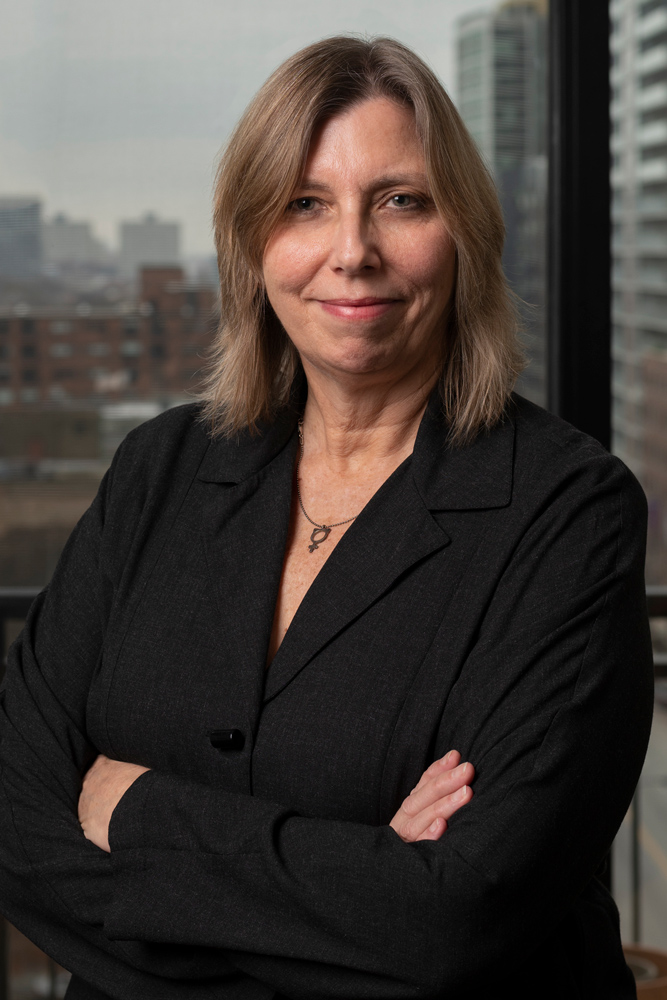
Susan Snodgrass
Susan Snodgrass is a Chicago-based critic and editor of ARTMargins Online. Much of her writing is devoted to alternative models of disquisitional practice and artmaking, whether exploring new genres of public art or contemporary art in former Eastern Europe. She is a 2018 recipient of a Creative Capital/Andy Warhol Foundation Arts Writers Grant for her blog,In/Site: Reflections on the Art of Place, which explores art, architecture and urbanism, and a finalist for the 2019 Dorthea and Leo Rabkin Foundation Arts Announcer Award. She has written for both impress and online publications for over thirty years, most notably forArt in America for which she was a Corresponding Editor, equally well asTextile: Cloth and Culture and THE SEEN. Her bookInside the Matrix: The Radical Designs of Ken Isaacs was published by One-half Letter Press in 2019.
mcfaddenworythe1936.blogspot.com
Source: https://artmargins.com/central-and-east-european-art-and-culture-1945-present/
0 Response to "Which of the Following Is an Example of Eastern European Folk Art?"
Post a Comment